
A Land-Clearing Tool That Turns Bush Into Biochar
Afriwild now offers another option with the CharBoss, a towable system that transforms biomass into biochar on-site, turning a land management challenge into valuable by-products. Essentially, it’s a giant kiln on wheels.
A Western Cape pilot project by Afriwild could help landowners tackle the removal of invasive plant biomass, with a trailer-mounted incinerator being tested to reduce fire risk, improve soils, and support restoration through carbon finance.
Traditionally, biomass that results from clearing dense bush or invasive species such as pine, wattle, and eucalyptus is burnt in open piles, carted off, or left to decompose.
Afriwild now offers another option with the CharBoss, a towable system that transforms biomass into biochar on-site, turning a land management challenge into valuable by-products. Essentially, it’s a giant kiln on wheels.
Founded in 2024 through a merger between Rewild Capital and Africlimate Solutions, Afriwild specialises in developing high-integrity carbon-removal projects in degraded African landscapes.
“We founded our business with a clear purpose: to use carbon finance as a practical engine for ecosystem restoration solutions in Africa,” says Erica Cheetham, strategy lead at Afriwild.
Afriwild is piloting the biochar project with operating partners on farms outside Worcester.
How It Works
Production begins with towing the CharBoss on site. Biomass feedstock is fed into the machine, where heat breaks down the organic material into a stable, carbon-rich char, rather than ash.
A powerful air curtain at the top of the chamber injects a high-velocity sheet of air that creates a barrier, containing sparks and embers within the unit while improving combustion of smoke and volatile gases.
This air curtain enhances thermal efficiency (the fire burns at about 900°C) and dramatically reduces smoke and other emissions compared with open-pile burning.
At the end of the process, the char is cooled and collected as biochar, a porous, long-lasting form of carbon that can be applied to soil.
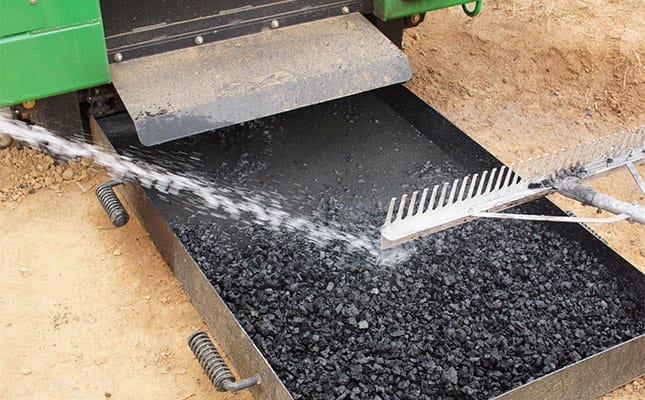
“This method reduces particulate matter emissions by more than 90% compared with open-pile burning and converts a portion of the biomass into stable carbon rather than releasing it into the atmosphere,” explains Cheetham.
The CharBoss can process up to 1t of biomass per hour, returning between 17% and 25% as biochar.
“Biochar looks similar to charcoal but has a much higher carbon content and [larger] surface area. The carbon content ranges from 75% to 92%, depending on feedstock type and conditions,” she adds.
Ideally, the biochar is inoculated and returned to the land where clearing occurred to help restore it and increase productivity. When this isn’t feasible or necessary, such as when a landowner doesn’t need all the biochar, Afriwild sells the excess to an organic compost manufacturer.
“There are multiple benefits to using biochar to improve soil health. Mixed with compost, it boosts soil organic carbon, water retention, and nutrient efficiency, while reducing the need for fertiliser,” says Cheetham.
Made In The US
The CharBoss was developed in the US by Air Burners Inc., in partnership with the US Forest Service, to reduce fuel loads in fire-prone landscapes. Because the system relies on controlled combustion, Afriwild is using the Worcester pilot to establish reliable safety protocols to minimise the risk of fire.
While the pilot tests operational logistics and protocols, Afriwild is already modelling ways that the technology could support larger restoration projects.
“From the outset, our projects are designed to deliver lasting, measurable benefits for the climate, biodiversity, and the communities that depend on healthy landscapes,” explains Cheetham.
“We believe carbon finance can be far more than a compliance tool; it can be a catalyst for building a greener, more resilient, and more prosperous Africa.”
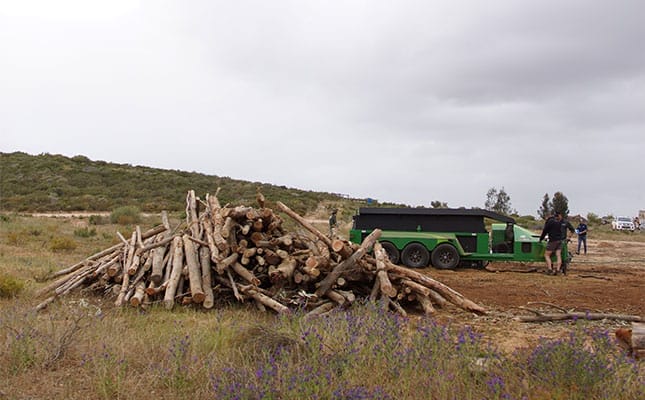
Actions such as clearing and converting encroacher bush into biochar, along with improving fire management and grazing practices, will increase soil carbon levels while boosting carrying capacity and ecosystem health.
“We are lucky to partner with real thought leaders in the conservation space. Over the 40-year lifespan of the Munywana project, the land could sequester an additional 1,1 million tCO2e [tons of carbon dioxide equivalent], which is equivalent to the electricity use of 229 000 homes, while also creating critical jobs in the rural economy,” says Cheetham.
Carbon Credits
Afriwild is in the process of registering its biochar project under a recognised carbon standard through Puro.earth. Once verified, it is expected to generate high-integrity carbon-removal credits, which could attract interest from global companies seeking durable carbon-offset options.
“Biochar carbon differs from most forms of soil organic carbon in its stability. Because it is highly resistant to decomposition and can persist in soils for centuries, it typically commands a higher price per carbon credit, at R2 500/tCO2e versus R320/tCO2e,” explains Cheetham.
Afriwild plans to expand the CharBoss solution into more regions, starting with the Munywana project.
“It’s still early days, but we see the potential of on-site biochar production to transform waste biomass into a powerful climate solution, locking carbon into the soil, generating revenue through carbon credits, restoring degraded land, and meaningfully reducing fire risk,” she adds.
“What was once a liability on the landscape is becoming a catalyst for regeneration and resilience.”
Full Article: Farmers Weekly