
The Hidden Cost of Hauling: How On-Site Air Curtain Burners Reduce Transport Emissions
The “Invisible” Problem in Waste Management
When organizations plan land clearing or biomass disposal, the solution is usually straightforward: haul it away. Branches, storm debris, land-clearing material, and forestry residue are loaded into trucks and transported to landfills, grinding facilities, or centralized processing sites. Once the material leaves the property, the site looks clean—and it feels like the problem has been solved.
But hauling doesn’t actually eliminate waste. It simply moves it somewhere else, often at a much higher financial and environmental cost than people realize.
What’s often overlooked is that hauling is one of the most energy-intensive and emissions-heavy steps in the entire waste-management process. Diesel fuel is burned before a single branch is processed, and those emissions don’t happen once—they repeat day after day, mile after mile.
According to the U.S. Environmental Protection Agency, transportation accounts for roughly 28% of total U.S. greenhouse gas emissions, with heavy-duty diesel trucks among the largest contributors. When those trucks are hauling wet, bulky, low-density wood waste, fuel efficiency drops even further—driving up both cost and carbon output.
Source: https://www.epa.gov/ghgemissions/sources-greenhouse-gas-emissions
This is the invisible problem in biomass management: hauling feels routine and unavoidable, but its cumulative impact is anything but small. That’s where air curtain burners change the equation.
Hauling Is Not Neutral—It’s a Disposal Strategy
Hauling is often treated as a simple logistical step, but in practice, it is the disposal strategy. The farther material is hauled, the more fuel is burned, the more labor is required, and the more infrastructure is consumed just to move waste from one place to another.
Unlike stationary equipment, hauling emissions increase directly with distance. Every additional mile driven produces more CO₂, regardless of how efficient downstream processing may be.
For organizations managing large volumes of biomass—municipalities, utilities, forestry operations, and contractors—transportation frequently becomes the single largest contributor to both disposal costs and emissions.
Why Biomass Is One of the Worst Materials to Haul
Wood waste behaves very differently than most other waste streams:
- It’s bulky, causing trucks to “cube out” before reaching weight limits
- It’s often wet, which reduces fuel efficiency
- It’s irregular in shape, increasing loading time and labor
- It has little downstream value, offering no economic return to offset transport costs
In practical terms, organizations are spending premium transportation dollars to move material that is often ground, burned, or buried shortly after arrival. From both a cost and emissions perspective, biomass hauling is one of the least efficient waste-management activities in operation today.
The True Cost of Hauling Biomass Waste
Every mile traveled adds cost, complexity, and carbon. These impacts are usually spread across multiple budgets—fuel, labor, fleet maintenance, and disposal—which makes them easy to underestimate.
Fuel Burn and Transport Emissions
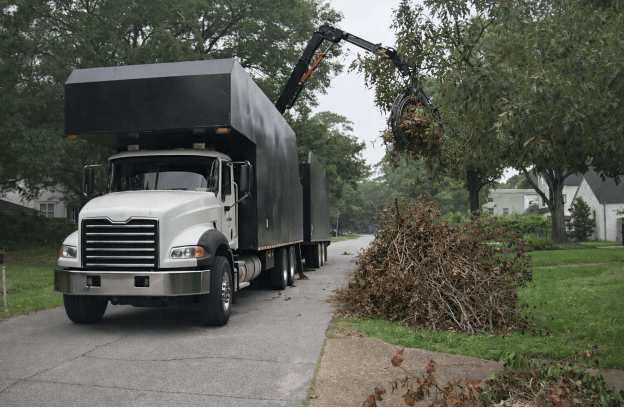
Hauling biomass requires diesel-powered heavy trucks operating near capacity. A single round trip moving approximately 20 tons of wood waste can consume 20–25 gallons of diesel, releasing hundreds of pounds of CO₂. When hauling becomes a daily or weekly activity, transport emissions can quickly exceed those generated by the disposal method itself.
Labor and Equipment Expenses
Fuel is only part of the picture. Drivers, loaders, insurance, tires, repairs, and vehicle depreciation all add up. In many regions, hauling alone represents more than 50% of total disposal expenses, especially when long distances or multiple handling steps are involved.
Tipping and Processing Fees
Once material reaches its destination, additional costs follow. Landfill tipping fees, grinding charges, and rehandling expenses compound both the financial and environmental impact—without reducing the original volume at the source.
Hauling vs. On-Site Elimination: A Cost Reality Check
Hauling often looks inexpensive when viewed as a single line item. But when fuel, labor, equipment wear, and tipping fees are considered together, transportation becomes the dominant cost driver.
Typical hauling-based disposal includes:
- Repeated diesel fuel consumption
- Driver labor and overtime
- Truck maintenance and depreciation
- Tipping or processing fees
- Schedule risk during peak demand
On-site air curtain burner disposal typically includes:
- Minimal transport fuel
- Fewer personnel dependencies
- No tipping or grinding fees
- Predictable, repeatable costs
- Immediate volume reduction at the source
This is why, at scale, air curtain burners are often the lowest total-cost option for managing vegetative waste—even when hauling appears cheaper on paper.
On-Site Air Curtain Burners: A Smarter Alternative
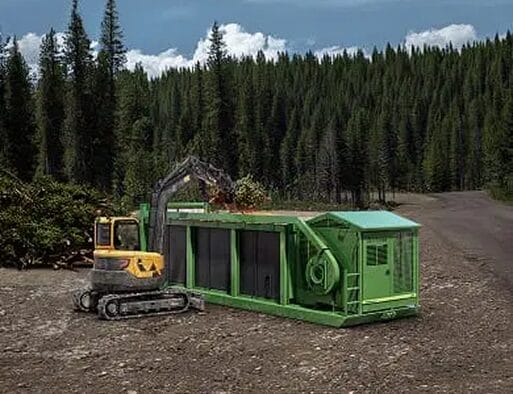
Instead of hauling biomass miles away, on-site air curtain burner systems from Air Burners allow operators to manage wood waste exactly where it’s generated—at the job site, staging area, or land-clearing location.
This approach removes transportation—the most expensive and emissions-intensive part of the process—entirely.
How Air Curtain Burners Work
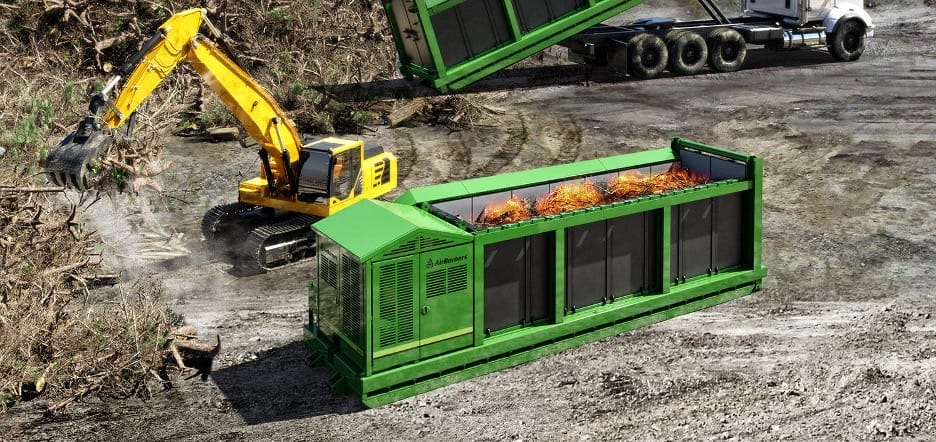
Air curtain burners use a high-velocity stream of air directed across the top of a refractory-lined burn chamber. This air stream creates a powerful “curtain” that traps smoke and particulates while intensifying combustion inside the chamber.
Compared to open burning, this controlled process produces significantly less visible smoke and more complete combustion. Large volumes of wood waste are reduced to a small amount of inert biochar, eliminating the need for trucking, grinding, or landfilling.
Learn more about air curtain burner technology:
https://airburners.com/what-is-an-air-curtain-burner/

Secondary Impacts Hauling Creates—but Budgets Often Ignore
Traffic and Community Impact
Convoys of heavy trucks increase congestion, road wear, and accident risk—especially during storm cleanup or emergency response. These impacts often affect communities already dealing with recovery.
Operational Bottlenecks
When trucks are delayed, loaders sit idle. When loaders wait, crews slow down. Hauling introduces dependencies that can stall entire projects during fuel shortages, weather disruptions, or periods of peak demand.
Cost Volatility During Emergencies
After storms, wildfires, or large-scale land-clearing events, trucking availability tightens and rates spike. What looks affordable during planning often becomes unpredictable during execution.
On-site elimination removes these variables altogether.
The Environmental and Economic Payoff
Eliminate Transport Emissions
Processing biomass on-site removes truck traffic from the equation. For operations hauling hundreds or thousands of tons per year, this can mean thousands of gallons of diesel saved annually and a significant reduction in CO₂ emissions.
Lower Total Cost per Ton
With no drivers, no long-haul trucks, and no tipping fees, air curtain burners consistently deliver a lower cost per ton of disposal than hauling-based methods—often becoming the most cost-effective option for large-scale land clearing.
Improve ESG and Scope 3 Reporting
Transportation emissions typically fall under Scope 3, making them difficult to control. On-site disposal provides immediate, measurable reductions by eliminating fuel burn rather than relying on offsets later.
Simplify Planning and Compliance
In California’s San Joaquin Valley Air Pollution Control District, air curtain burners have been formally recognized as Best Available Control Technology (BACT) for the on-site disposal of vegetative waste from agricultural, forestry, and land-clearing activities.
BACT determinations evaluate cost, emissions performance, and available technology, and this designation reflects the district’s conclusion that air curtain burners provide a highly effective balance of emissions control and operational efficiency for clean wood waste disposal.

Real-World Impact: Forestry Waste Without the Miles
A county in the southeastern United States replaced traditional hauling with an on-site air curtain burner to manage forestry debris.
- Before: 25 truckloads per week, approximately 40 miles round trip
- After: Zero hauling trips
The result was nearly 15,000 gallons of diesel saved annually and an estimated 150 tons of CO₂ emissions avoided. The system paid for itself in under two years while also reducing fire risk, truck traffic, and illegal dumping concerns.
Sustainability Starts at the Source
Sustainability isn’t only about recycling or renewable energy—it’s also about distance.
The closer waste is processed to where it’s generated, the lower the emissions, costs, and operational risks. On-site elimination replaces the traditional “collect and haul” model with a more efficient and resilient approach.
Air curtain burner technology delivers:
- Lower costs
- Fewer emissions
- Stronger environmental performance
Frequently Asked Questions About Hauling and Air Curtain Burners
Is hauling wood waste expensive?
Yes. Fuel, labor, truck maintenance, and tipping fees often make transportation the largest portion of total disposal cost—especially over long distances or repeated trips.
How do air curtain burners reduce emissions?
They reduce emissions by eliminating the need to haul biomass. Removing transport removes diesel fuel use and related CO₂ emissions entirely.
Are air curtain burners legal?
In many jurisdictions, air curtain burners are permitted for clean wood waste when operated according to local and state regulations.
When does on-site burning make the most sense?
On-site burning is most effective for large volumes of vegetative debris, storm cleanup, forestry operations, and remote locations where hauling is costly, and tipping fees will break the bank.
Are air curtain burners cheaper than grinding or hauling?
In many cases, yes. When total costs are considered, air curtain burners often deliver a lower cost per ton than grinding and hauling.
Rethink “Waste Removal” as “On-Site Elimination”
Hauling wood waste may feel convenient, but when fuel, labor, emissions, and risk are fully accounted for, it is often the most expensive and carbon-intensive option available.
On-site air curtain burners offer a different approach—one that reduces transportation, lowers total disposal cost, and delivers immediate environmental benefits.
For municipalities, contractors, utilities, and forestry operators managing large volumes of vegetative waste, the question is no longer whether hauling has hidden costs—but how long it makes sense to keep paying them.
Explore S-Series Air Curtain Burners:
https://airburners.com/products/s-series/
External Reference
EPA Transportation Emissions Overview https://www.epa.gov/ghgemissions/sources-greenhouse-gas-emissions
